
Top, Middle, Base: How to Read Fragrance Notes Like a Perfumer
Top notes are a first impression — and they lie. The spritz you fall for at the counter is gone in fifteen minutes, and what you actually live with all day is a fragrance you haven't met yet. Learning to read notes is the single most useful skill in buying perfume, and it takes about five minutes.
I'm Karen Young, founder and perfumer of OUI the People. Here's how a notes list actually works — and how to stop being seduced by the wrong fifteen minutes.
Notes are a timeline, not a recipe
A fragrance pyramid — top, middle (or heart), base — isn't a list of ingredients by quantity. It's the order in which a composition reveals itself on your skin. Lighter molecules evaporate first, heavier ones last, and a good perfumer choreographs that evaporation so the scent tells a story instead of just fading. When a fragrance smells completely different at hour three than at minute one, that isn't a flaw. That's the design.
Top notes: the introduction (0–15 minutes)
The brightest, fastest molecules — citrus, bright fruit, aromatics. Bergamot, lime, neroli. Their job is to open the door, and they do it beautifully — then they leave. Never buy a fragrance on the strength of its first five minutes; you're buying the door, not the house.
Heart notes: the actual personality (15 minutes–a few hours)
This is the fragrance the perfumer built — florals like jasmine, fruit accords, spice, the milky and honeyed textures that give a composition its character. If the top notes are the handshake, the heart is the conversation. Judge a perfume here at the earliest.
Base notes: what stays on your scarf (hours 3–forever)
The heaviest, most tenacious materials — sandalwood, musk, amber, vanilla, resins. This is what people smell when they hug you at the end of the day and what's still on your coat next week. The base is the note family you have to be able to live with; it's also where quality shows, because there's nowhere left to hide.
How to read a notes list without being fooled
Three things to know. First, a published notes list is a menu description, not the formula — "guava, lychee, frangipani" tells you the experience, not the chemistry. Second, notes interact: our Window Fruit lists guava and lychee, but the milkiness underneath changes what that fruit means on skin. Third, the order printed usually mirrors the timeline — so read the last third of any notes list hardest. That's your actual purchase.
Shopping with this
Spray on skin, walk away, and judge at hour two — the dry-down is the commitment, the opening is the flirtation. Top notes sell bottles; base notes earn compliments. And if you want to practice reading a full pyramid in real time, wearing one fragrance from morning to night is a lesson in fragrance composition- and its evolution on your skin.
Questions we hear
Why does the same perfume smell different on my friend?
Skin chemistry — warmth, moisture, pH, even diet shift how quickly each layer evaporates and which facets amplify. It's why we'll always tell you to audition a scent on your own skin rather than trusting a blotter or someone else's wrist.
How long does each layer last?
Rough guide: tops 5–15 minutes, hearts two to four hours, bases six hours to overnight. Concentration moves everything — an eau de parfum stretches the whole timeline compared to an eau de toilette.
What's an accord?
Several materials blended to read as one idea — "condensed milk tea" isn't a single ingredient, it's an accord. When a note in a list sounds like a memory rather than a plant, you're reading an accord.
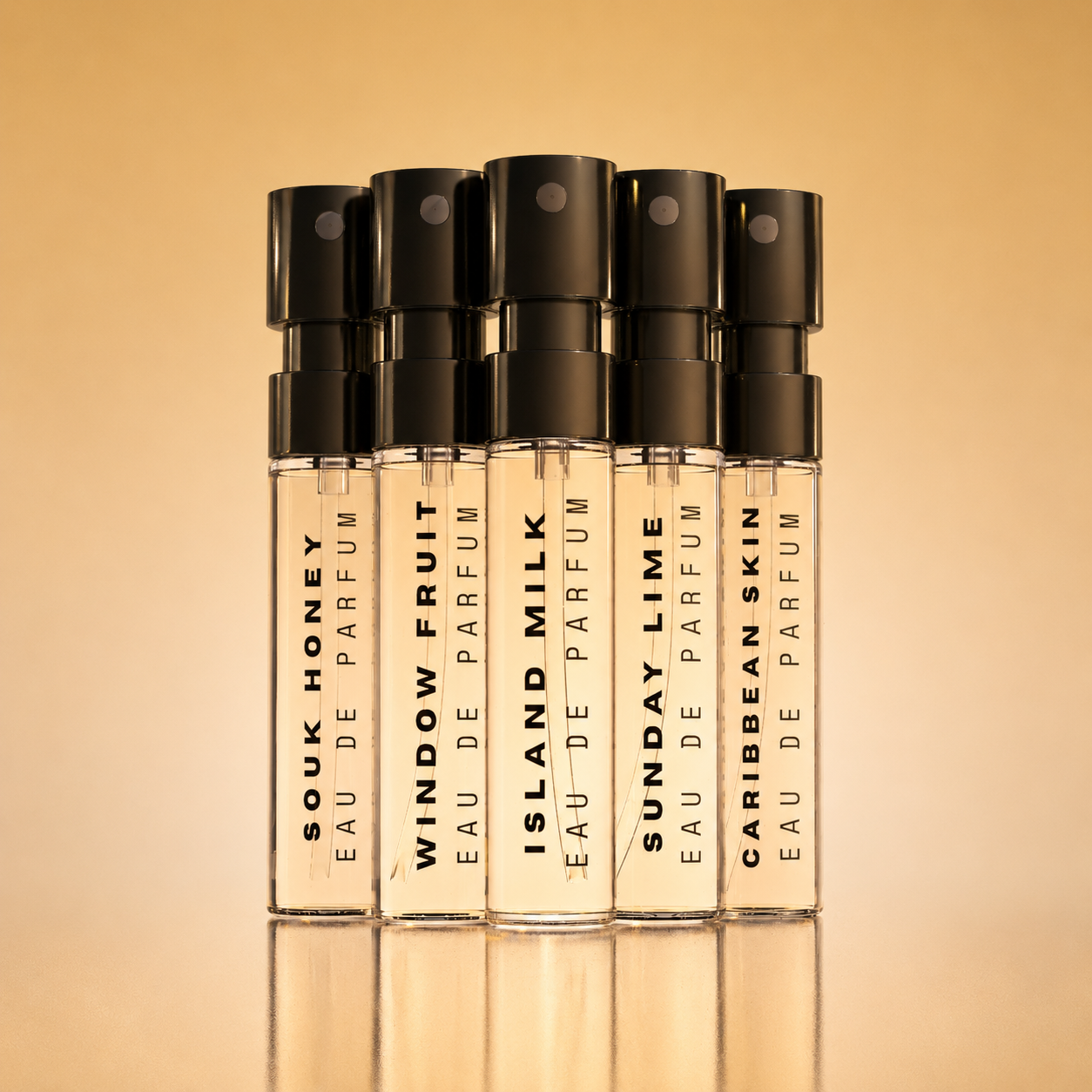
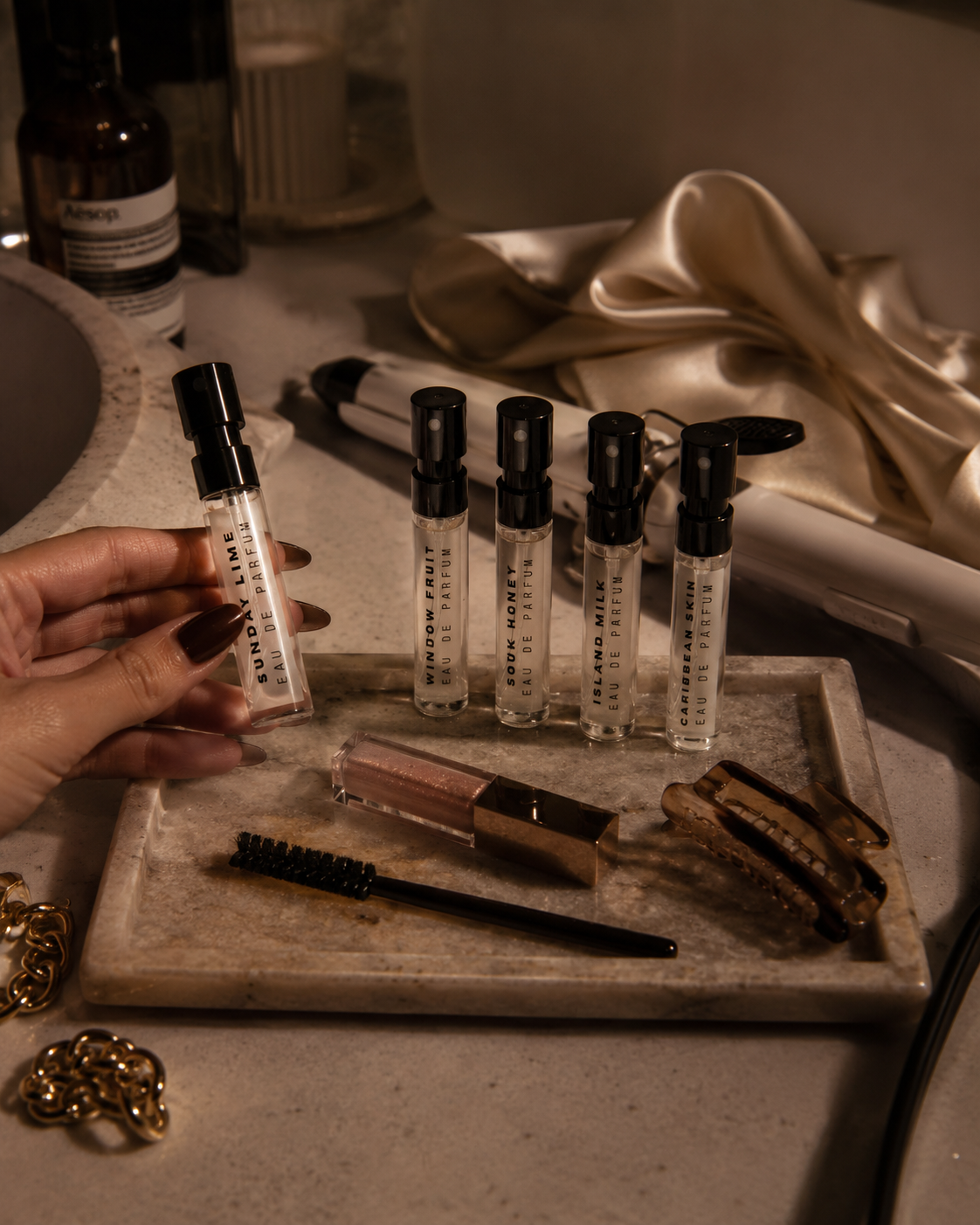
The fastest way to learn your own taste in tops, hearts, and bases: the Discovery Set — all five OUI the People eaux de parfum in trial size. Wear one per day for a week and you'll read notes lists like a professional.

Leave a comment
This site is protected by hCaptcha and the hCaptcha Privacy Policy and Terms of Service apply.