
Article: What Does Sandalwood Smell Like? Creamy, Warm, and Timeless
What Does Sandalwood Smell Like? Creamy, Warm, and Timeless
Sandalwood is the note that makes a fragrance feel expensive. Not loud. Not flashy. Just undeniably rich — in the way that something well-made feels different in your hands even before you know why. It's one of the oldest fragrance materials on earth, highly valued for its aromatic qualities and as a popular ingredient in rituals and perfumery. Sandalwood is a class of highly aromatic woods derived from trees in the genus Santalum, known for their yellow-brown, fine-grained heartwood that retains its sweet scent for decades.
It is one of the oldest fragrance materials on earth, used for thousands of years across South Asia, the Middle East, and East Africa in religious ceremonies, medicine, and perfumery. Sandalwood's historical trade routes, especially during the incense trade, significantly influenced its cultural significance. The sandalwood tree is hemiparasitic, drawing nutrients from neighboring plants, and its wood is unique in retaining its fragrance for decades. And it remains one of the most prized base notes in modern fragrance, valued for a quality that is surprisingly hard to find in perfumery: quiet depth. Today, sandalwood is also featured in candles and diffusers, popular for creating calming, fragrant spaces.
What Does Sandalwood Smell Like?
Sandalwood smells creamy. That is the word that comes up first and most often, and it is accurate. There is a smoothness to sandalwood that feels almost liquid — like warm milk poured over wood. It's not sharp, not resinous, not green. It is soft, round, and slightly sweet, with a gentle woodiness that wraps around whatever it touches.
If musk is the scent of clean skin, sandalwood is the scent of warm skin — skin that has been in the sun for an hour, carrying a faint golden warmth that is part body heat and part something deeper. There is a reason sandalwood appears so often in fragrances described as "skin-like" or "second skin." It has a natural intimacy that very few other wood notes share.
Beyond the creaminess, sandalwood carries subtle nuances depending on its origin. Indian sandalwood is known for its sweeter and more complex fragrance, while Australian sandalwood is lighter and woodier, making it a sustainable alternative. Hawaiian sandalwood sits somewhere in between, balancing sweetness and dryness. Compared to other woody scents like cedar, vetiver, or pine, sandalwood is softer, creamier, and less sharp — making it a prized base note and fixative in fragrance compositions.
On skin, sandalwood lasts. It is a base note with one of the longest lifespans in perfumery, often detectable eight to twelve hours after application. And unlike some base notes that grow heavier over time, sandalwood tends to become softer and more skin-like as it wears. The primary active compounds, alpha-santalol and beta-santalol, are responsible for sandalwood's scent and therapeutic benefits.
The Scent Profile at a Glance
- Family: Wood / creamy wood
- Character: Creamy, warm, smooth, softly sweet, skin-like
- Pairs with: Vanilla, rose, jasmine, musk, amber, cardamom, oud, vetiver, tonka bean
- Mood: A warm hand on the small of your back. Afternoon light on wooden floors. The feeling of being held without being crowded.
A Sacred History
Sandalwood's story in perfumery begins long before perfumery existed as an industry. In India, sandalwood has been considered sacred for over four thousand years. It is burned as incense in Hindu and Buddhist ceremonies, applied as a paste to the skin during religious rituals, and carved into temple architecture where the wood continues to release its scent for decades. In Buddhism, sandalwood is used for meditation to calm the mind and maintain alertness. In Jainism, sandalwood paste is used in worship and showered as blessings by monks onto their disciples. Sandalwood is also a primary incense material in East Asian religions, particularly in Chinese, Korean, and Japanese traditions. In Sufism in India, disciples apply sandalwood paste on the graves of revered Sufis as a mark of devotion and respect.
The Sanskrit word for sandalwood — chandana — literally means "wood for burning in glory." Across South Asian, Southeast Asian, and Middle Eastern cultures, sandalwood has carried associations with spirituality, meditation, and inner calm. It is the scent of sacred spaces. Sandalwood also possesses anti-inflammatory and antimicrobial properties, making it effective for treating skin conditions like acne, eczema, and psoriasis.
In Western perfumery, sandalwood became a key ingredient during the 19th century as trade routes brought Indian sandalwood oil to European fragrance houses. Indian Mysore sandalwood — specifically Santalum album — is so prized and so over-harvested that it is now government-regulated, making the genuine oil extraordinarily rare and expensive. Many sandalwood species are now considered threatened due to past over-harvesting, leading to regulations and the development of sustainable plantations.
Modern perfumery relies increasingly on sustainable alternatives — Australian sandalwood, plantation-grown varieties, lab-grown sandalwood oil, and high-quality synthetic substitutes like Javanol and Polysantol that capture the creaminess of natural sandalwood without the environmental cost.
What Sandalwood Does in a Fragrance
Sandalwood is a base note, meaning it sits at the foundation of a fragrance composition and is one of the last things you smell as a perfume evolves on skin. But calling it just a base note undersells what it actually does.
It is a fixative — it slows down the evaporation of lighter notes above it, extending the life of the entire composition. A fragrance built on a sandalwood base will last noticeably longer than one built on lighter woods or musks alone.
It is a blender. Sandalwood has a remarkable ability to smooth out rough edges in a composition — softening sharp citrus notes, rounding out spiky florals, and adding warmth to cool or angular ingredients. Perfumers sometimes describe it as "cashmere for fragrance" because it wraps around everything and makes it feel more luxurious.
It creates intimacy. Sandalwood-heavy fragrances tend to sit closer to the skin than fragrances built on louder base notes like oud or patchouli. They reward closeness — you have to lean in to fully experience them. Its calming and therapeutic benefits promote relaxation and contribute to overall well-being. Studies show that aromatherapy with sandalwood can lower cortisol levels and promote deep sleep.
Blending with Other Scents
Blending sandalwood with other scents is where its true magic shines. When combined with florals like jasmine or rose, it creates an aroma that feels both rich and soft, grounding the brightness of the flowers with a creamy, woody base. When matched with spices such as cardamom or saffron, sandalwood brings out their warmth and complexity. Even fresh, zesty notes like citrus or green herbs are smoothed and rounded by sandalwood's gentle sweetness.
This ability to blend seamlessly is why sandalwood is a favorite among perfumers. It creates a foundation that allows other fragrance notes to shine, while adding its own signature warmth and depth.
Sandalwood at OUI the People
Sandalwood is a recurring base note across the OUI the People fragrance collection, anchoring multiple compositions with its creamy warmth.
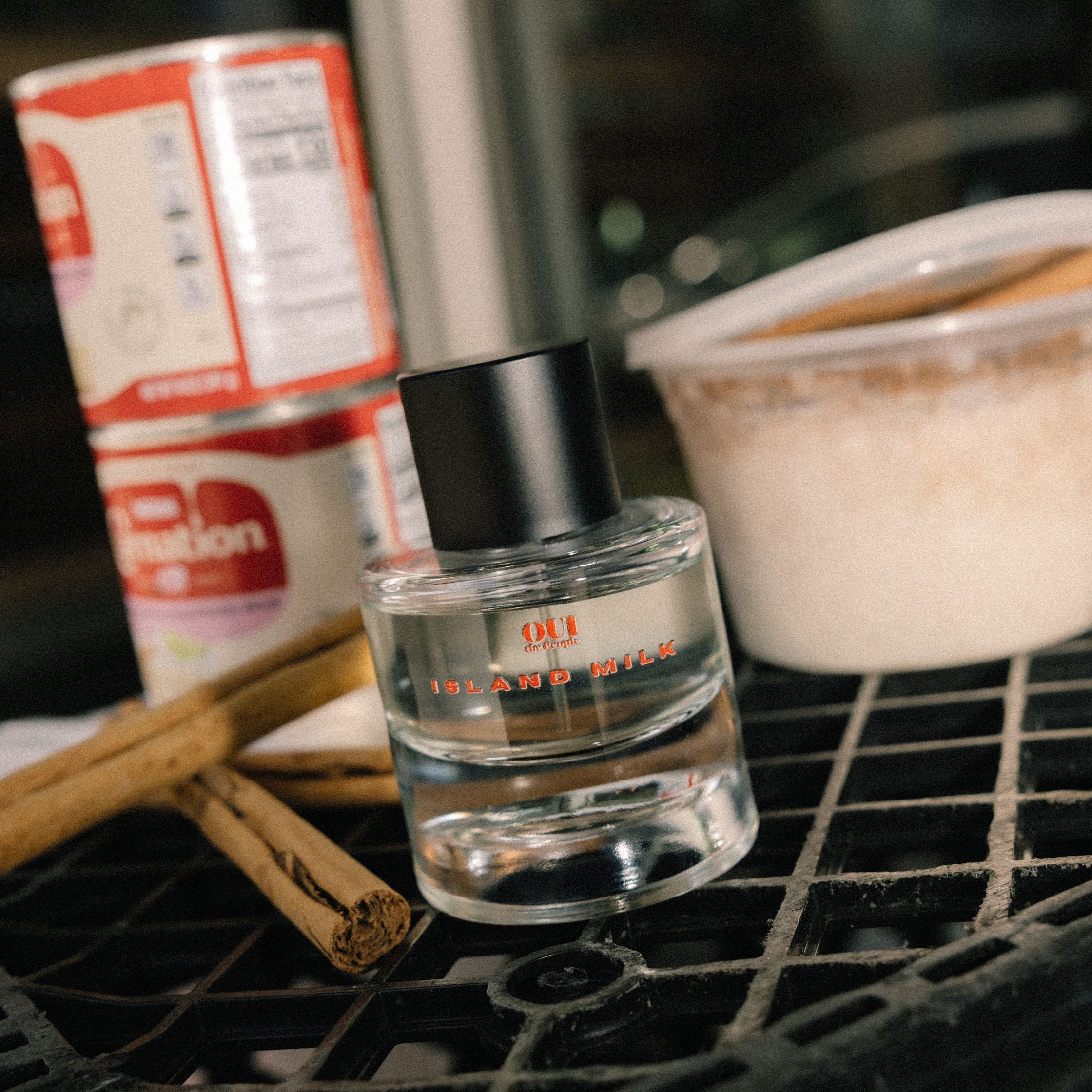
In ISLAND MILK Eau de Parfum, musky sandalwood sits in the heart alongside tonka bean, creating the warm, skin-close foundation that the spiced milk and cinnamon notes rest on. Without the sandalwood, Island Milk would be sweeter and lighter. With it, the fragrance has a depth that feels grounded and grown — cozy without being childish.
In SOUK HONEY Eau de Parfum, sandalwood appears in the base alongside golden amber and manuka honey. Here, it plays a slightly different role — adding a smooth, woody warmth beneath the honeyed sweetness that keeps the fragrance from becoming too gourmand. The sandalwood is what gives Souk Honey its "second skin" quality in the dry-down, the moment where the fragrance stops smelling like perfume and starts smelling like you.
CARIBBEAN SKIN Eau de Parfum uses white sandalwood in its base paired with ambroxan and skin musk — the cleanest, most transparent expression of sandalwood in the collection. It is sandalwood at its most intimate: smooth, warm, and barely there, designed to be felt more than smelled.
Layering any of these fragrances over the FEATHERWEIGHT Hydrating Body Gloss in Orange Blossom amplifies the sandalwood base. Moisturized skin holds base notes longer and releases them more slowly, meaning the creamy sandalwood dry-down you love at hour three will still be detectable at hour eight.
Frequently Asked Questions
Is sandalwood a masculine or feminine scent?
Sandalwood is one of the most gender-neutral notes in perfumery. Its creamy, skin-like quality does not lean masculine or feminine — it simply smells warm and human. It has been used extensively in both men's and women's fragrances for centuries.
How long does sandalwood last on skin?
Sandalwood is one of the longest-lasting fragrance ingredients. As a base note, it can persist on skin for 8–12 hours or more. It also tends to become softer and more skin-like as it wears, meaning it is still present long after you stop actively noticing it.
What is the difference between sandalwood and cedarwood?
Both are wood notes, but they smell quite different. Cedarwood is drier, sharper, and has a pencil-shaving quality — clean and slightly austere. Sandalwood is creamier, warmer, and sweeter — more like warm milk on wood than freshly cut timber. Cedarwood projects crispness; sandalwood projects warmth.
Why is sandalwood so expensive?
Indian Mysore sandalwood takes 30 to 60 years to mature before the heartwood produces quality oil. Over-harvesting has made it extremely scarce and now government-regulated. This scarcity drove the development of Australian sandalwood farms and high-quality synthetic alternatives, which have made sandalwood accessible in modern perfumery without the environmental cost.
Is sandalwood good for sensitive skin?
Sandalwood oil has been used in Ayurvedic medicine for centuries for its soothing properties. In fragrance, sandalwood-based compositions tend to be among the gentler options because the note itself is soft and non-irritating. However, as with any fragrance, individual sensitivities vary — always test on a small area first.
This is part of the OUI the People Fragrance School — a growing guide to understanding the notes, families, and language of fragrance.

Leave a comment
This site is protected by hCaptcha and the hCaptcha Privacy Policy and Terms of Service apply.