
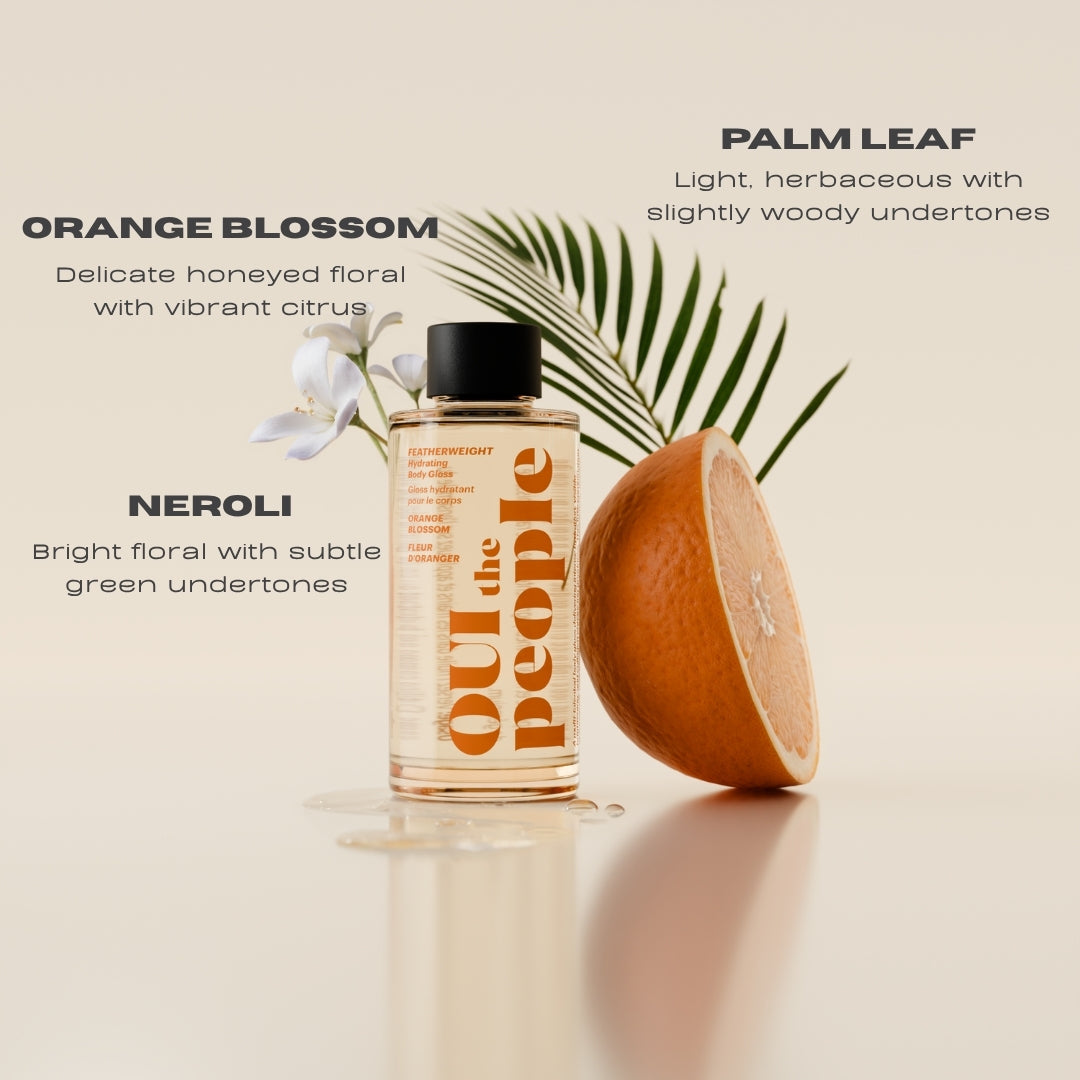
What Does Neroli Smell Like? The Orange Blossom Note Behind Luxury Fragrance
If you have ever caught a scent that stopped you mid-stride — something white and floral but somehow also warm, almost honeyed — there's a good chance neroli was involved.
Neroli oil is the essential oil extracted from the flowers (blossoms) of the bitter orange tree (Citrus aurantium), which is native to the Mediterranean region and western India. It is one of the oldest and most revered ingredients in perfumery, prized for the way it manages to be at once fresh and deep, bright and tender. While both neroli and orange blossom come from the same flower, neroli oil is steam distilled, resulting in a scent that is softer, more skin-like, and more alive, whereas orange blossom absolute is extracted using solvents and has a richer, headier aroma.
Neroli oil is produced through a labor-intensive process called steam distillation, requiring a large quantity of flowers to yield just a small amount of this precious oil.
What Does Neroli Smell Like?
Neroli opens with a luminous, bright citrus burst layered over a delicate, almost dewy freshness — like walking through an orange grove after rain. The first impression is clean, green, and lightly sweet, with a hint of honey and spice that adds complexity. This green freshness brings an earthy, revitalizing quality, enhancing neroli's uplifting, sunny scent. But within moments it warms. The brightness softens into something honeyed and floral, with a faint spiciness underneath that keeps it from ever feeling one-dimensional.
If you have smelled orange blossom water in a kitchen — the kind used in Middle Eastern and North African pastries — you have met a close relative. But the scent of neroli in perfumery is more refined, more radiant, and slightly soapy, evoking a clean, airy, and sparkling character. The neroli scent sits somewhere between a citrus note and a white floral, bridging the gap in a way that almost no other ingredient can. Its balance of citrus, white floral, and green qualities produces a refreshing, complex aroma with a prominent citrus edge and gentle bitterness, often described as "sunlight through leaves."
On skin, neroli tends to feel intimate rather than projecting. The neroli scent is never overpowering, but rather subtle and inviting, drawing people in rather than announcing itself from across a room. It dries down into a soft, slightly musky sweetness with fresh, green notes that contribute to its clean and slightly soapy fragrance character — one reason it appears so often in skin scents and fragrances designed to smell like a better version of bare skin.
The Scent Profile at a Glance
- Family: White floral / citrus floral
- Character: Luminous, honeyed, green, softly spiced
- Fragrance note: Neroli is a versatile fragrance note in perfumery, prized for its floral, citrus, and aromatic qualities. Due to its volatility, neroli is frequently used as a top note to provide an immediate, uplifting opening in fragrances, but it can also function as a base note, adding depth and longevity to scent compositions.
- Pairs with: Jasmine, sandalwood, amber, vanilla, cardamom, bergamot
- Mood: Radiant morning light. Clean sheets dried in the sun. The moment before a first kiss.
Neroli in Perfumery: A Brief History
The name itself carries a story. Neroli is said to be named after Anne Marie Orsini, the Princess of Nerola, who used bitter orange blossom oil to perfume her gloves and bath in 17th-century Italy. The scent became so associated with her that the oil took her name.
Neroli and orange blossom are both foundational in traditional eau de cologne formulations, prized for their refreshing, floral, and citrus characteristics. Neroli, in particular, is valued for its refreshing character and versatility as a bridging note, seamlessly connecting other ingredients in these compositions. It is one of the key ingredients in eau de cologne, the citrus-forward fragrance style that originated in Cologne, Germany in the early 1700s. But its reach extends far beyond cologne. Neroli appears across every fragrance family — in white florals for its radiance, in gourmands for its honeyed warmth, and in chypres for its clean, grounding quality.
What makes neroli unusual among floral notes is its versatility. Jasmine is lush and sensual. Rose is romantic and full. Neroli can be any of these things depending on what surrounds it. Paired with spices and amber, it becomes warm and enveloping. Paired with green notes and aquatics, it becomes sparkling and transparent.
How Neroli Shows Up in Modern Fragrance
In contemporary perfumery, neroli often serves as a bridge note — connecting brighter citrus openings to deeper, warmer hearts. Neroli works beautifully with notes like tonka bean, musk, woody, and amber, enhancing the overall scent profile and adding depth, warmth, and sophistication. It is the ingredient that makes a fragrance transition feel seamless, that creates the sensation of a scent unfolding rather than simply changing. Neroli's scent is often considered relaxing, evoking a sense of calm and tranquility.
You will find neroli in fragrances described as "golden," "sun-drenched," or "honeyed floral." If a perfume reminds you of warm skin with a soft white floral glow, neroli is almost certainly part of the composition.
It is also one of the notes most closely associated with the gourmand-floral crossover — fragrances that manage to feel both edible and elegant. When paired with honey, vanilla, or caramelized sugar notes, neroli adds a brightness that keeps sweetness from becoming heavy.
Neroli at OUI the People
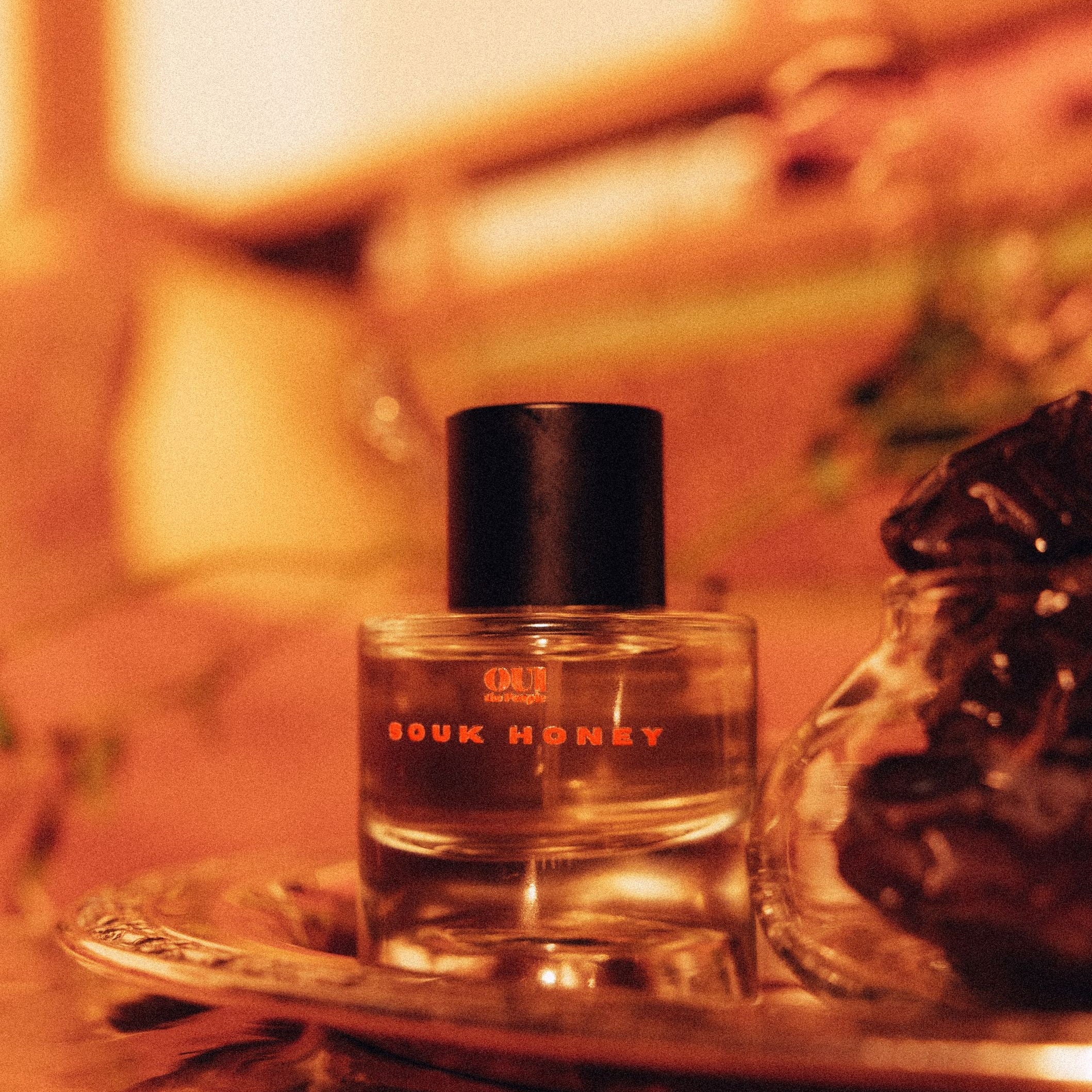
In our collection, neroli lives in Souk Honey.
In SOUK HONEY Eau de Parfum, neroli nectar appears as a top note alongside orange blossom and jasmine petals, creating that luminous opening before the scent settles into cardamom, dates, and manuka honey. It is the note that gives Souk Honey its golden, sunlit quality — the sense of light catching the top of something warm and sweet.
Frequently Asked Questions
Is neroli the same as orange blossom?
Both neroli and orange blossom absolute are derived from the white blossoms of the bitter orange tree, but they are not identical. Neroli is the essential oil obtained through steam distillation of these white blossoms, resulting in a sharper, greener, and more citrusy fragrance note. In contrast, orange blossom absolute is extracted with solvents, producing a warmer, sweeter, and more honeyed aroma. In perfumery, the two are often layered together — neroli for brightness and lift as a top or heart note, orange blossom absolute for depth and sweetness, sometimes as a base note.
Does neroli smell like orange?
Not in the way you might expect. Regular orange oil (from the fruit peel) is sharp, zesty, and straightforwardly citrus. Neroli shares a family resemblance but leans floral, green, and honeyed rather than fruity. Think of the difference between biting into an orange and standing beneath a flowering orange tree.
What kind of fragrances feature neroli?
Neroli appears across almost every fragrance category — from clean colognes and fresh florals to warm gourmands and spiced orientals. It is particularly common in fragrances described as "golden," "luminous," or "skin-like."
Is neroli a heavy note?
No. In fragrance, neroli-forward compositions tend to be lighter and less overwhelming than heavier florals, which makes them a strong choice for people who find some perfumes too intense.
This is part of the OUI the People Fragrance School — a growing guide to understanding the notes, families, and language of fragrance.

Leave a comment
This site is protected by hCaptcha and the hCaptcha Privacy Policy and Terms of Service apply.