
EDP vs. EDT: What the Letters Mean — and What You're Actually Paying For
The letters on the bottle change everything — how a fragrance opens, how long it stays, and what you're actually paying for. "Eau de parfum" and "eau de toilette" sound similar. They're not. They're the most useful information on the label, and most people have never been told what they mean.
I'm Karen Young, founder and perfumer of OUI the People. Here's the two-minute education that will change how you buy fragrance.
It's about concentration
Every fragrance is perfume oil — the actual scent — dissolved in alcohol and a little water. The letters tell you the ratio. As a general guide: an eau de cologne runs around 2–4% oil, an eau de toilette (EDT) roughly 5–15%, an eau de parfum (EDP) roughly 15–20%, and a parfum or extrait 20% and up. Houses vary, but the ladder holds: more intensity, more actual perfume in your perfume.
What concentration changes on your skin
An EDT front-loads: a bright, projecting opening built for the first hour or two, then a polite exit. There's a place for that — it's why EDTs rule the gym bag and the office spritz.
An EDP is built for the long game. The higher oil concentration means the base notes — the woods, musks, ambers that anchor a composition — have enough material to keep unfolding into the evening. Counterintuitively, an EDP often sits closer to the skin than an EDT while lasting far longer. Stronger doesn't mean louder. It means more staying power and a deeper dry-down.
Why the price is different
Perfume oil is the expensive part of perfume — the naturals, the curated materials, the part a perfumer actually composes. When you pay for an EDP, you're paying for two to three times the oil of a typical EDT. Price the wear, not the bottle: a fragrance that's still with you at dinner needed one application. The one that vanished by lunch needed three.
Why everything in our house is EDP
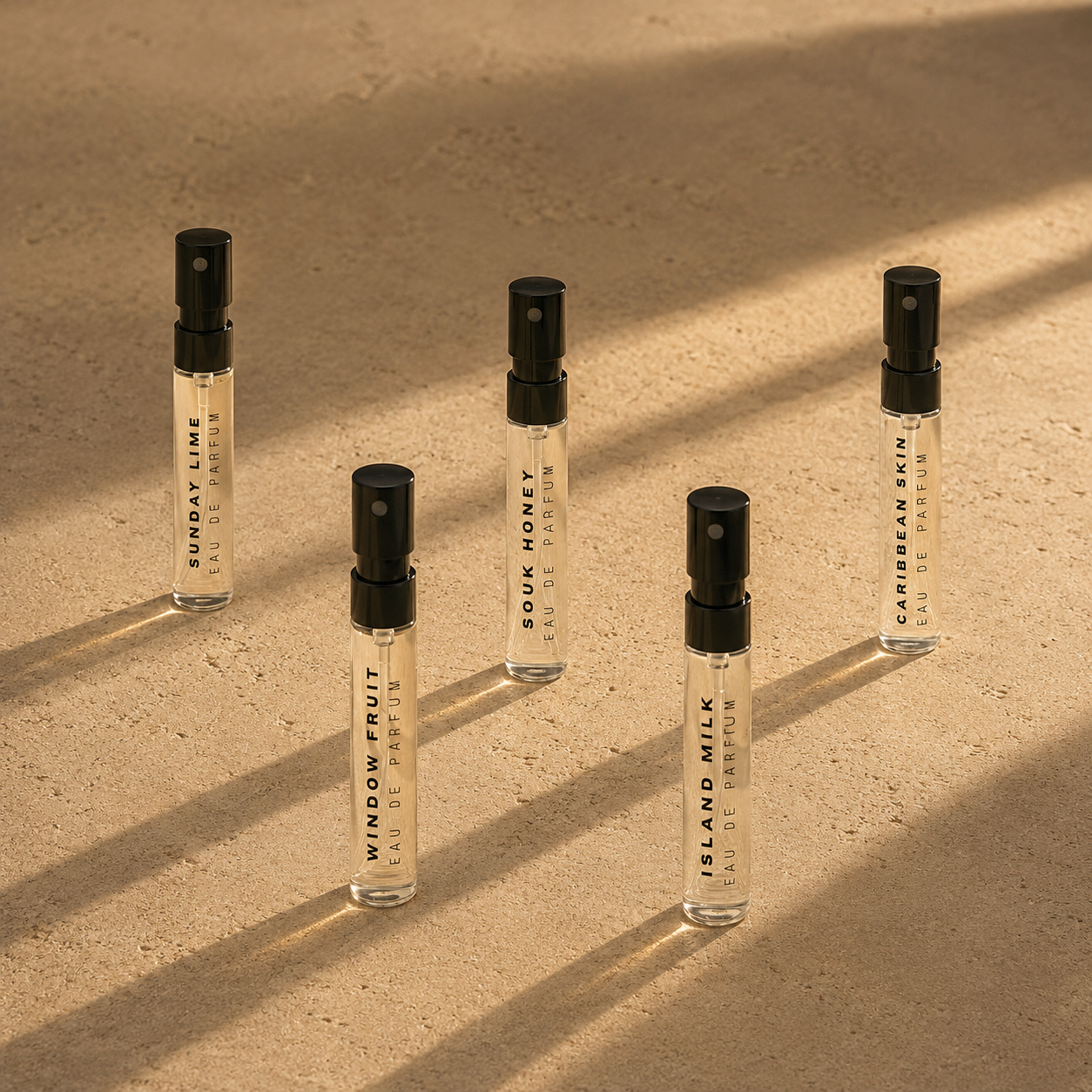
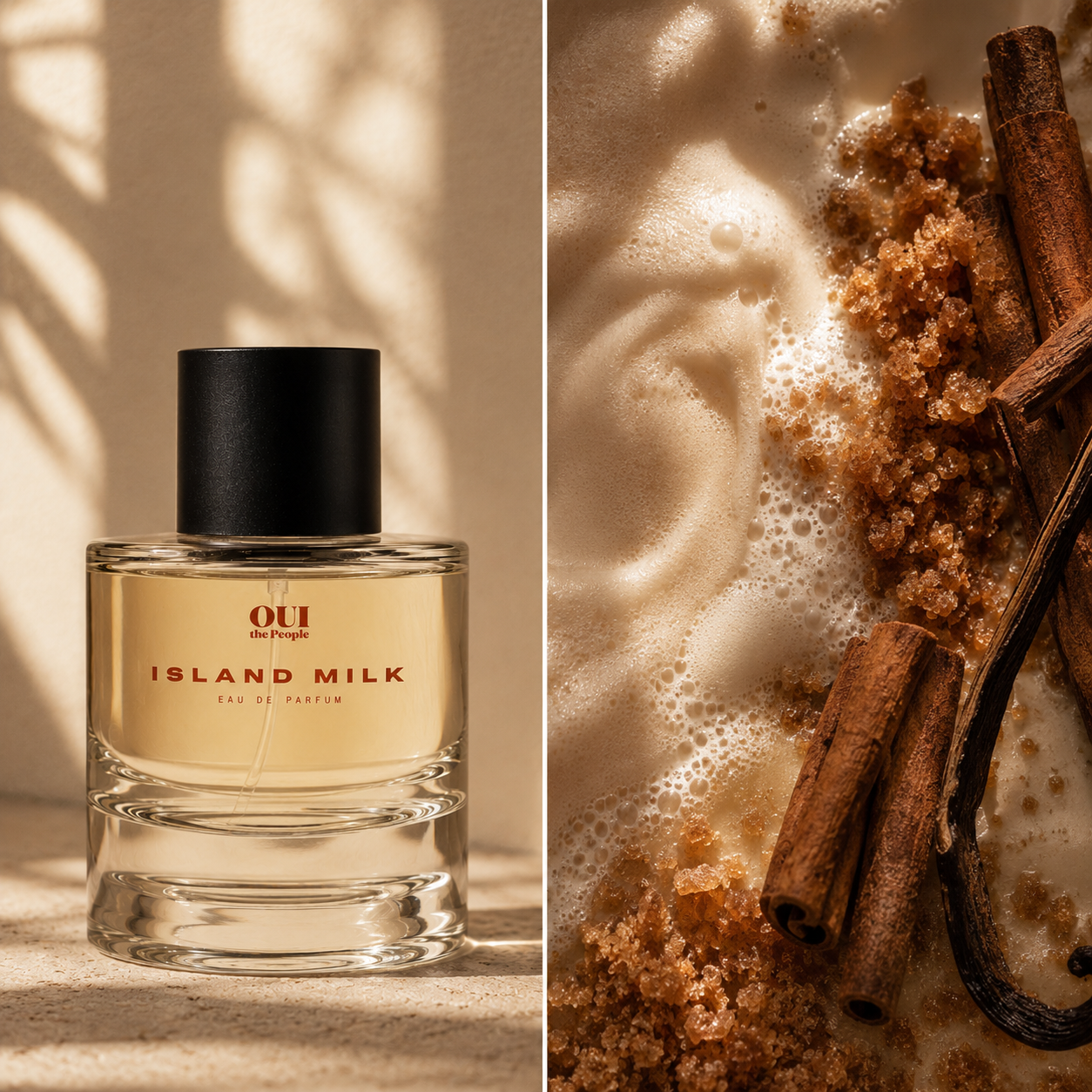
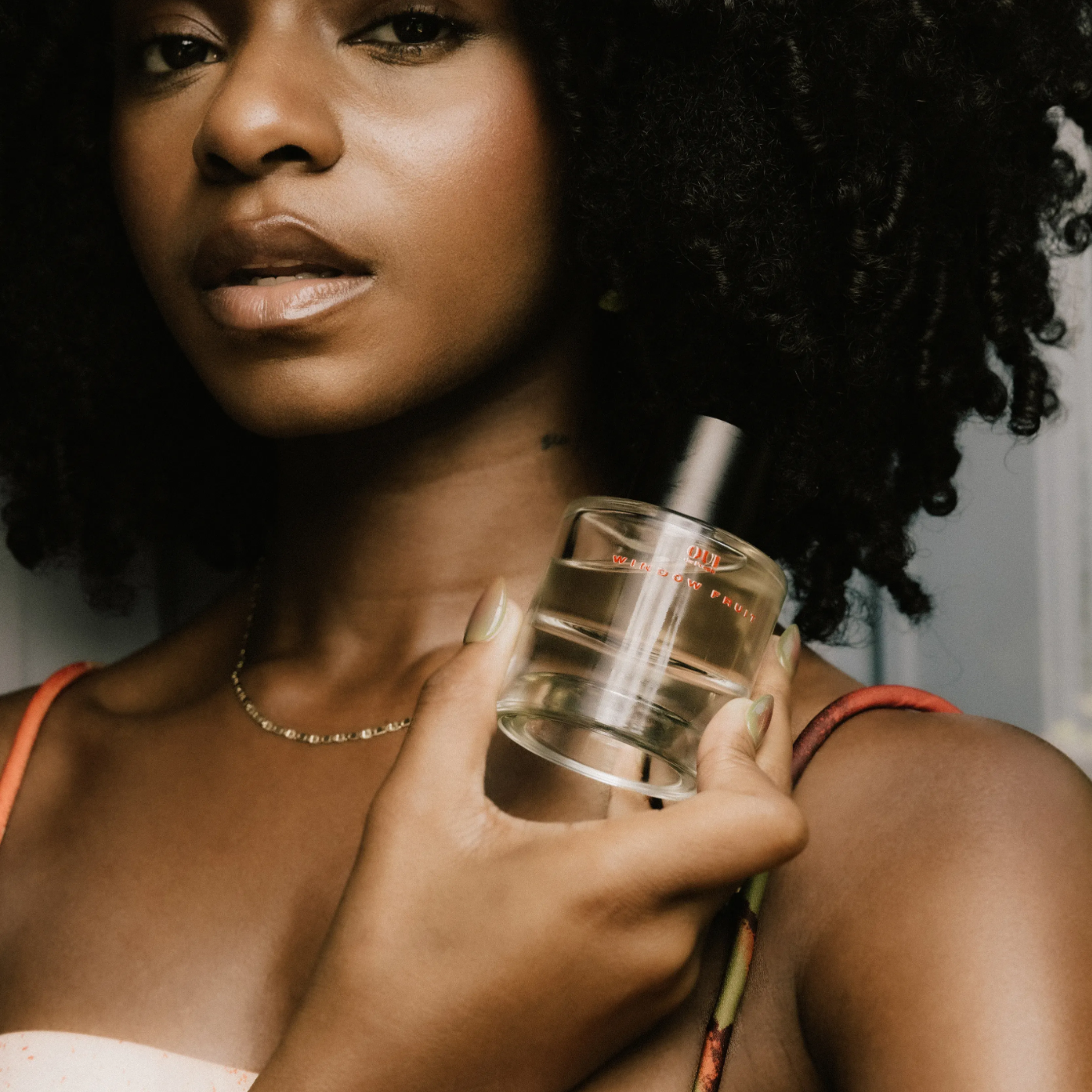
All five OUI the People fragrances — Island Milk, Window Fruit, Caribbean Skin, Sunday Lime, and Souk Honey — are eaux de parfum, on purpose. We make skin scents: fragrances that live close to the body and read as you, warmer. At EDP strength, it's still with you when you get home — which is the entire point.
Questions we hear
Which lasts longer, EDP or EDT?
EDP, almost always — typically six to eight hours or more on well-moisturized skin versus two to four for an EDT. (Skin prep matters as much as the letters; we wrote the full ritual in How to Smell Good All Day.)
Is EDP too strong for daytime?
No — projection (how far a scent travels) and longevity (how long it lasts) are different things. A well-made EDP can be more intimate than a sharp EDT while outlasting it by hours. Wear the EDP to work; just spray with intention — two to four sprays on skin.
What about extrait, and what about body mists?
Extrait is the top of the ladder — dense, rich, priced accordingly. Body mists sit at the other end: light scent, low concentration, lovely as a hydrating layer under a fragrance but not a substitute for one.
Want to feel the EDP difference before committing? The Discovery Set — five eaux de parfum in trial size for $38, with $20 back toward your full bottle. One full day of wear will teach you more than any label.

Leave a comment
This site is protected by hCaptcha and the hCaptcha Privacy Policy and Terms of Service apply.